Breaking with the known

Staggering around Rome over the holidays, trying to find any cognitive through line, and then maybe a stable emotion or two in the aftermath of a 24-hour travel day, I blurted out to no one in particular, “what the hell am I doing here??”

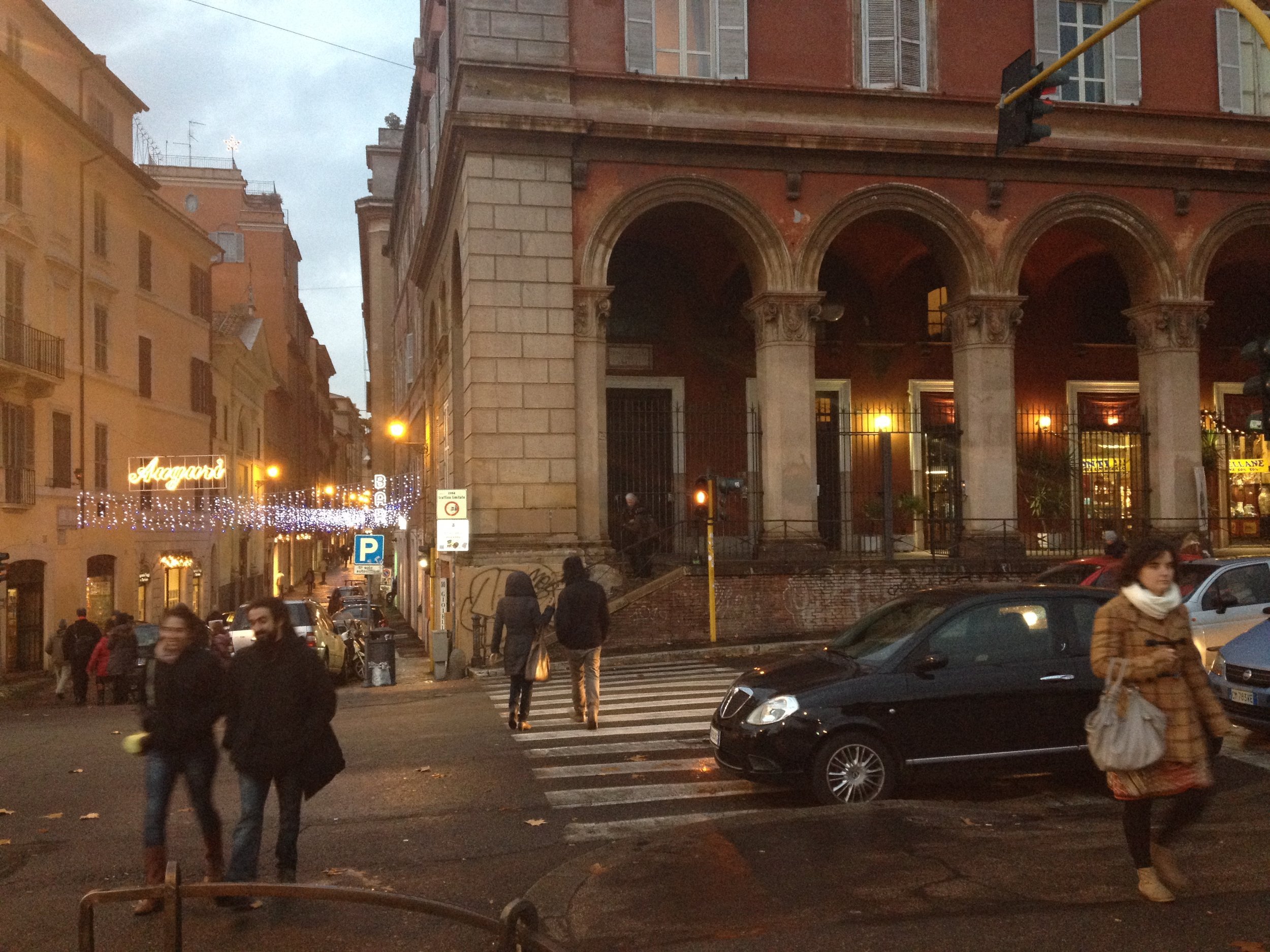
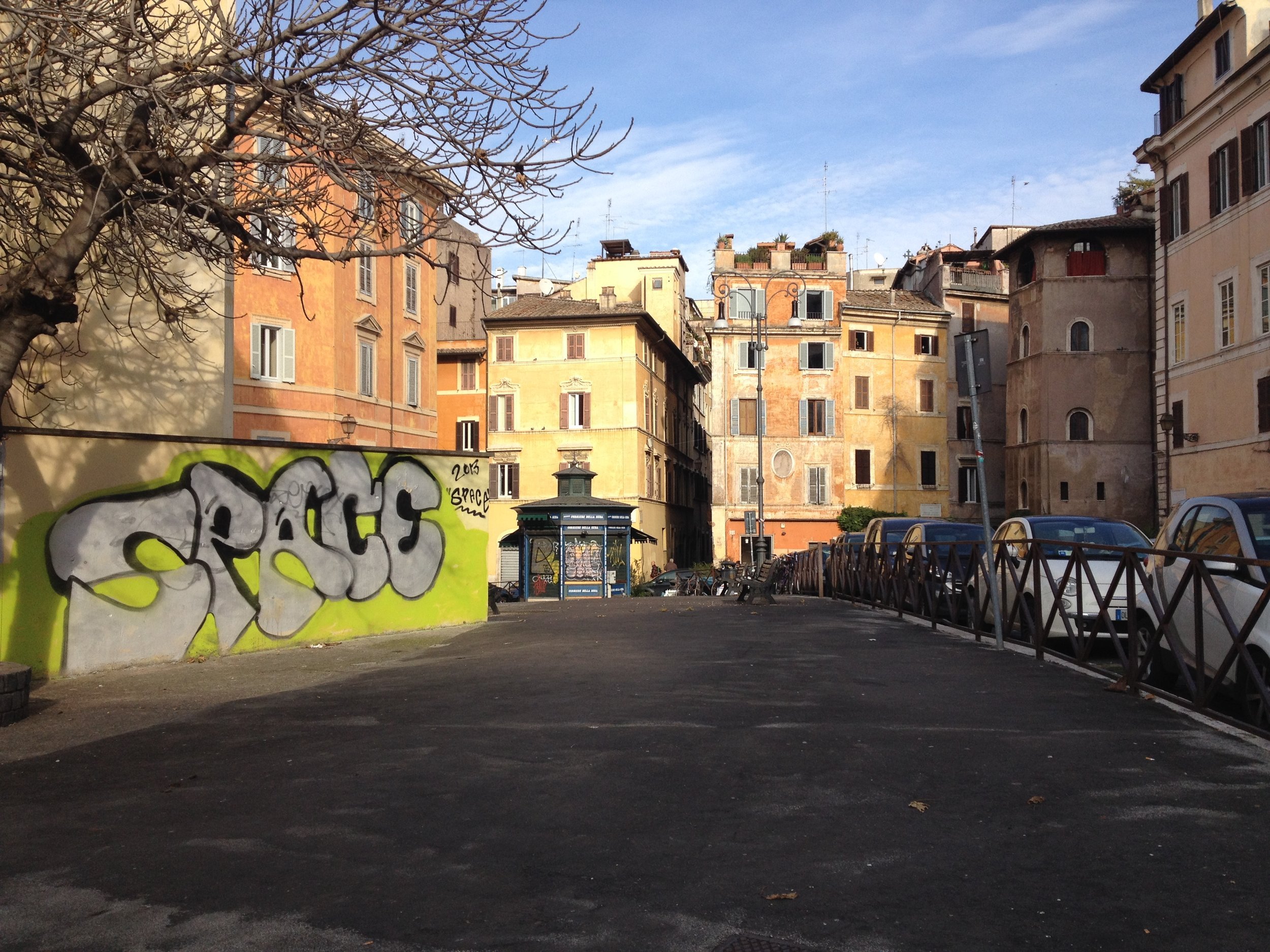
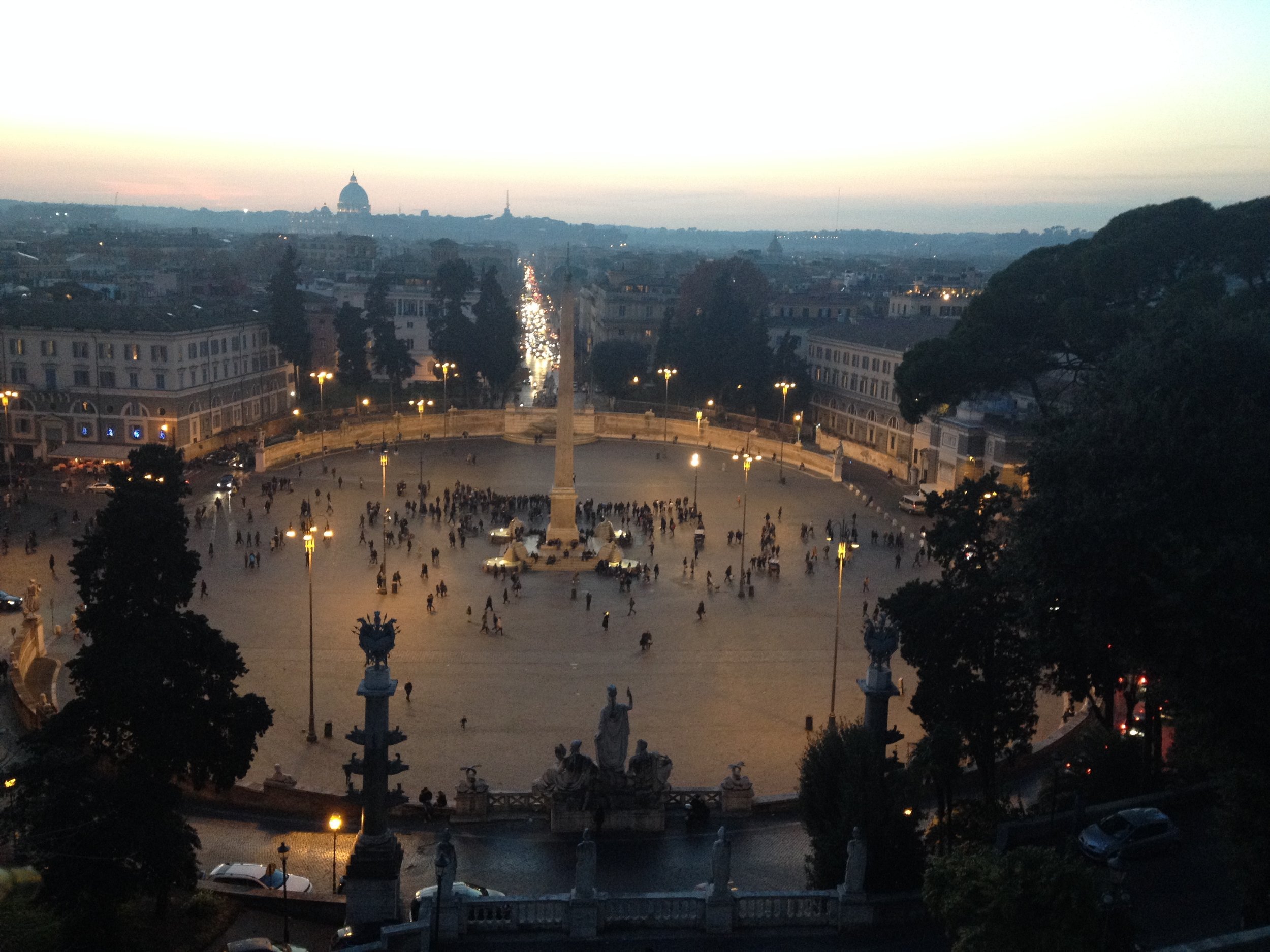
Four months earlier I’d made a decision to spend Christmas in Rome by myself.  It was going to be the first one I didn’t spend with my 12-year old son, and the first one with just me.  I had spent a week there 15 years ago and couldn’t forget the smell of musty chocolate and cobblestones.   A friend told me about a great place to stay in Trastevere, a neighborhood on the “other” side of the river, and in spite of my bank account having serious reservations, a solo pilgrimage to Rome seduced me.

“Seduce” is an interesting choice of words.  It means “to lead astray.”  That feels about right.  Because in those first few days, I felt duped by my own wanderlust.  My first night, after attempting to pry my eyelids open for a few hours, I wandered through the city’s tight streets and found a small pizzeria to celebrate the start of this adventure.  It was perfect in 100 ways—the food was amazing, the banter among the waiters was like off-Broadway theatre, I felt intrepid and alive.  But it was also a perfect snapshot of what would be so challenging for me the next 10 days.

I’m a social creature.  While time alone is essential, engaging with others brings me great joy and wonder.  That night, and for the rest of the trip, I exchanged only a handful of words with the people around me.  Surrounded by humanity on every street corner, in every museum, restaurant and church pew, I became the quiet observer.

Or that’s how I perceived it in my better moments.  It often just felt like isolation.  As I ventured off every day in search of food, culture, and experience, instead of feeling the magic I’d expected to feel–the magic that glimmered in my friends’ eyes as I told them I was headed to Rome for the holidays—I just felt 6,000 miles from home and awash in tears in the middle of the night.

But this feeling of exquisite aloneness in the global mecca that is Rome is just what my soul needed most. It opened the door onto a world of unexplored feelings about my own insignificance, one of my greatest fears.  Truth be told, I have worked tirelessly to disprove my insignificance.  I do meaningful work, I try to be a good person and a good mother, I have a community of friends I relate to and connect with.

Lying alone in bed listening to the endless traffic of Lungotevere Raffaello Sanzio, I saw how much energy it took from me to sustain my significance.  And yet, in the great scheme of things, across the eons of time and layers of civilizations I discovered in the remnants of Rome, we are insignificant.  Truly and profoundly.  And?  So?

Owning my insignificance, letting go of that relentless drive to sustain it, tensions in parts of me I’d never met started to unwind.   My breath lengthened.  I heard more of the dialogue in my heart.  My presence, sitting on a park bench, walking through a busy piazza, filling up the tub, or reading alone at a corner table, was quieter, far more textured and so much more alive.

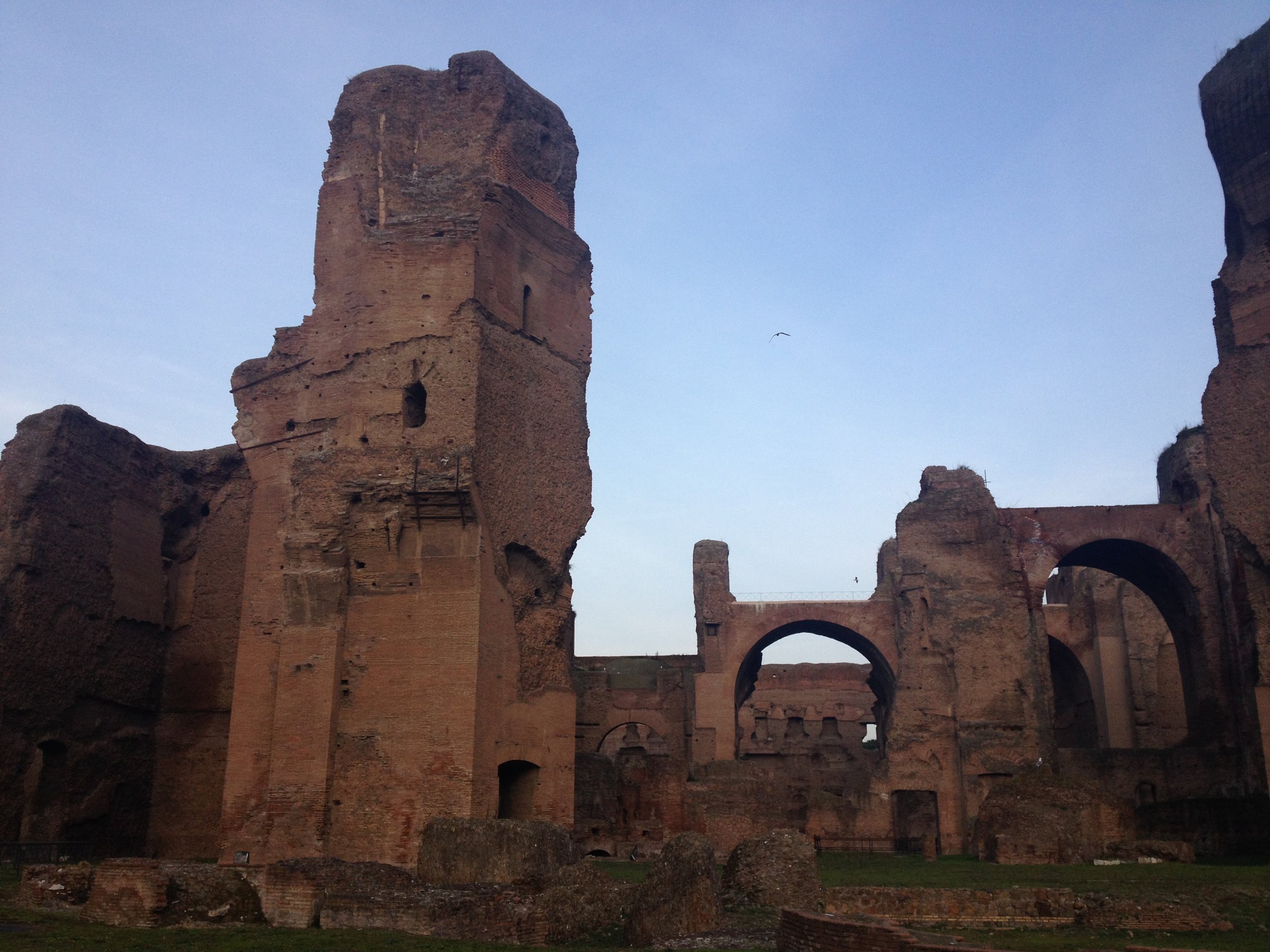
And then, somewhere in the middle of the trip, I started to feel a great ocean of energy that seemed to flow through everything.  Life energy weaving its way through the sea of human beings all around me, across the Ponte Sisto, around the 2,000 year-old columns still holding up the Forum of Augustus, within my tears on Christmas Eve.

All this time I’ve spent trying to wrestle significance from life, this pervasive energy was mostly invisible to me.  Now it seemed to carry me along like a river and held me intact for the rest of the trip.  There were still ‘lows’ to be had.  It wasn’t all bliss, by any means.  But in a culture obsessed with personal significance and the simulation of connection, I felt totally insignificant and, at the same time, more authentically connected to the world around me than ever before.  This, I knew, could sustain me.

I got back home a week ago.  Everyone asks about my trip.  I explain that it was amazing and also emotionally rugged.  In telling my story, I find more to unpack about what it all meant.  With increasing clarity, I see just how impossible it would have been for me to dissolve the way I did in the context of my routine, my ‘normal.’   I had to shake off all the comforts of the known and experience life without so many handrails, without the usual certainties, to see a new reality.

So if you feel something drawing you to do something that appears slightly out of range, pay attention, be seduced.  It’s a sign your soul wants to grow—to challenge old assumptions, to turn some self-concept on its head, and to break through to a new reality, one that is more expansive and filled with possibility.

So here’s to new and expanded views in 2014.  I think we’re going to need them.

Transparency as Power

Power.  In the evolutionary chapter we find ourselves in, power and the struggle to embody it in ways that are life affirming, not hurtful or harmful to others, remains the essential struggle.

We see macro power struggles played out in the world around us.

Through the debilitating inequities of power in our financial systems…the global surge for power and voice in suppressive political regimes…the power to control and access information in our technology explosion…the monotonous power of our conventional systems of defense, military or law enforcement, used to control anyone or any country exhibiting power that threatens us…and the relentless quest in many societies, including ours, to constrict the value, the freedom and the power of women.

Power finding expression.  Power finding parity.   We unite across race and class and country to bring balance to macro power disparities as best we can, because the stakes are too high and the costs to our freedoms too great.

It’s hopeful one moment, and crushing the next.  The forces for freedom, on the one hand, and control on the other appear locked in a mythic battle.  From one perspective, it appears that fewer and fewer of us challenge the dominant global fixation on consumption at all costs.

The majority’s inability to confront intractable assumptions about continued material growth without radically new methods is a choice to condone the ongoing exploitation of humans and nature.  Control appears to have the upper hand.  Every one of us loses.

Glued to our screens watching the macro power struggles happening around us, we miss the micro power struggles looking for resolution inside us.  Science confirms that individual consciousness shapes the world around us.  So if we, as individuals, don’t wrestle with the power grabs, the power give-aways, and the power disparities inside us, there is no hope of finding resolution in the power struggles outside us.

I’m not suggesting we halt all purposeful external action.  I am suggesting we have neglected the inner battles, the spiritual sides of us, for too long, and we can do both. If we maintain any hope of resolving the unceasing battles in every sphere, we must do both.

Meet the despot or naysayer inside you, trying to live in the same body as the aspiring truth teller, the artist seeking self-expression, the soul longing to live free.

Do we suppress our deeper truths to make sure we don’t rock the boat?  Do we contain a soul’s longing in order to protect the people around us from discomfort? Do we censor our own self-expression to keep our place in the hierarchical systems that pays us for our labors as long as we adhere to the conventions they require?

If we do, then we are complicit in the war against life, vitality and freedom.  If we do, we have contributed to creating the controlling tyrants and bullies that ravage our human and earth resources.  If we do, we have all but disowned the personal power that is rightfully ours.

The control freaks and the bullies inside us only hold sway when we ignore them, pretend they do not exist or simply let them define the experience of our lives.  Collectively, we give these characters the most power when we point fingers at the people around us who hold up these perverse, unwanted characteristics like a mirror and we proclaim these “ others” to be the bad ones, thereby imbuing them with the power of our own unexamined shadows.

To claim our personal power, we must pay closer attention to all these oppositional forces inside of us and begin brokering a peace.  We must own every aspect of our character, no matter how dark or perverse, and ask from whence they came and what they are asking of us to acknowledge about our unmet needs or deepest longings.  And we must traverse these less pleasant byways of ourselves and not succumb to guilt or self-loathing for the feelings they may inspire in us.

To claim our personal power, we have to be willing to let go of the idea of being the “good” girl or boy, the knight in shining armor, the selfless caretaker, the ever steady leader, and accept the idea that we may not be liked or understood, or even seen as successful in the conventional ways.  We are invited to understand ourselves as closer to the mythological gods and goddesses who reveal themselves as capable of beautiful creation and awful destruction.

To claim our personal power we must be willing to believe that there is no external solution to an internal problem, which demands a kind of radical intimacy with ourselves.

Radical intimacy with ourselves is an unabridged truth telling.  We stop deflecting, numbing or distracting ourselves and instead dare to bear witness to and actually feel our feelings, especially the ones we run from, not just the ones that bolster our sense of adequacy and righteousness.  It’s the most courageous path bar none, and it’s the only one that leads us anywhere close to real freedom.

Because when we are fully transparent with ourselves, there is nothing we observe in others that we haven’t also seen in ourselves.  Which leads to the ratcheting down of blame, and the scaling up of compassion.  Transparency with ourselves softens the internal conflicts and creates a more lasting peace with our partners, our families and the immediate communities that surround us.

Ultimately transparency with ourselves IS our personal power.

Personal power. We are below or above no one.  With deep humility, we claim our right to imagine any reality that expands and honors our soul’s song. Living this close to our authenticity shatters the conventions and breaks the established matrix of reality.  It’s not even close to comfortable.  It feels lonely as hell.  Yet over time, other creative, intrepid souls will come to meet us in this new place.  A place where we connect without pretending.  Where we connect without fear.  Where we finally connect for real.

So meet yourself and meet your personal power.  Let’s meet there, why don’t we, and create the world anew.

Tragedy and Invitation….

Big….Stuff….Is…..Happening.  All round us.  Inside us.  Right next door.   Up and down the east coast.  Across the globe.  And it’s moving into the realm of “beyond description.” 

Our first response, our first perception, is almost always reactive and fearful.  Unbelievable, we say.  Scary, horrible, tragic, mind-numbing.  Because the “stuff” that is happening in our lives is real.  All of these events threaten what we have, reduce our security, take away comforts, financial or otherwise, instigate real loss of friends, loved ones, possessions, our sense of safety.  And no one is immune.  Everyone I know is confronted right now with loss and upheaval of all shapes and sizes.

About three years ago, life threw me a giant curveball in the form of a broken relationship and loss of family.  My first response was that of hapless victim.  Something “happened to me.”  The pain I felt was deeply personal.  It felt like intentional harm perpetrated by an angry god.  In those first few months of that perception, I gave away all my power, and stayed stuck in the dark, with limited options and no way to create something new in the aftermath of change.  Because loss is extraordinarily painful.  And it’s also simply change.

In time, I understood that the victim story was a debilitating belief.  It was the least creative response I could have to the loss (change) I was experiencing.  Underneath the victim story that I told myself over and over was a much deeper truth that wanted expression.  And that truth was that I had been aching to live and express my soul’s calling, and I wasn’t courageous enough to do it in the context of my existing relationship.  So I held on in fear.

The longer I held on, the more I suppressed and the more my denial took hold, until finally the universe took a sledge hammer to the situation and ripped everything apart like Hurricane Sandy–stripping me of all I believed I cherish most—my partner and life in a traditional family structure—like you might rip off an arm or a leg.  Hard, fast, painful and immediate.

Three years later, I can see this whole event in my life as pivotal.  I have learned that change is constant, and I can either resist it, creating a logjam of suppressed emotions and denial—knowing that eventually the universe will bring in the “big guns” in the form of big winds, big waves, or big tragedy–or I can step forward towards change, watching the visible and intuitive signs all around me, symbols of the forthcoming change, and embrace the challenges I’m perceiving as invitations.

Tragedy or invitation.  Loss or invitation.  Death or invitation.  Of course they are both.  Better yet, they’re everything we can imagine them to be.  But how we perceive them in the moment, or at least a day, a week or a month later, makes a very real difference in how quickly and creatively they move, morph and allow for the new in our lives to come forward into something so beautiful it can, and will, take our breath away.

Death, tragedy, loss—the same challenges we’ve faced since our earliest beginnings of consciousness—test our resolve and adaptability and invite us to flex a very old but much underused muscle, the muscle of new perception.  It’s a muscle that just gets stronger the more we use it, and allows us to perceive all challenges—frankenmonster storms, polarizing elections, death of loved ones, heart-wrenching fissures in cherished relationships, zero financial security, loss of hearth and home, even just a explosive argument at work or at home—simply as invitations to grow.

These kind of trauma-inducing events demand that we really look at the assumptions we were holding about the “infrastructure” we all think we need to feel safe and peaceful.  And the more that gets stripped away from us–the more “infrastructure” we lose that we always thought was necessary to keep our lives contained–the more we see of the real resources inside us that represent the truth of who we are and what we need most after the proverbial lights go out.  And the more we see and feel what connects us all, because the ideas and structures that separate us have fallen away.

Since my own personal tragicomedy, everything has changed.  As I discovered my own unexpressed desires for more sovereignty in my relationship, I could see that I precipitated its brutal end to catalyze a new beginning.  As reflected so beautifully in the archetypal symbol of Ouroboros, everything dies so something new can be born, the eternal return.  But because I was resisting the “death” of us with all my might, the death throes were more violent than they ever needed to be.  If I had been listening to my own needs and responding to them in the moment, the learning for me might have been more gentle.  More like an invitation.

Invitations ask us to step forward, rather than step back.  Invitations offer a new experience.  Invitations are expansive.  In the face of an invitation, we stay curious, we step in.  We don’t repel or push away, rather we embrace the darker thing, the shadowy thing, because what’s inside it, underneath it, beyond its current perception of horribleness, is love–a new and transcendent beginning–wanting expression.

That’s what’s in front of us now. Today, tomorrow and for the duration.  An opportunity to see the world around us, in its entirety, as an invitation to perceive anew.  If we practice this as individuals, we can do this as a collective.  And it’s an invitation to finally and truly own our most divinely inspired creativity—which is just a passport to what we want most of all—our freedom.

Money with a Consciousness

Spurred on by my good friend Andrea Hiott who started the magazine Pulse in Berlin, I wrote a piece for an edition on money.  I struggled to write for a while, because my relationship to money has been so, well, tortured.  So I found it easier just to interview myself and put some distance between me and my emotions.  Lo and behold, I discovered things I never knew about money and me.  And it’s changing my relationship to it already.  It’s also expanded my idea of how we might generate money, for ourselves and our community, in the future.  So check it out and add to the thinking why don’t ya….

JM: Do you remember what cash felt like in your hands when you were a kid?  Wasn’t it thicker then, like dollar bills were actually heavier than they are now?  $25 was a lot of money then, remember?  You came home with that much every Sunday making omelets at the Sunday Times in the heart of south Baltimore.

LF: I worked hard for that cash.  Always “under the table.”  Hard cash.  I was a short-order cook when I was 12.  Seasoning omelet pans with pounds of salt.  My skin slippery with the smells of eggs, butter, bacon, heat.  And the burns on my arms from the stove….I was earning my keep, don’t ya know.   But alot of the time I gave my mom the money.  Our groceries for the week.  On $25.  It’s a different world.

JM:  Were you just working just for the money?  What motivated you?

LF:  I never worked just for the money.  My mom’s photography studio was above the restaurant, and I was always hanging out doing homework, or just passing time waiting for my mom to finish up in the darkroom.  The cook was an interesting woman, an artist like my mom, and she asked me to help her out on Sundays when the restaurant was open for brunch.  I guess I wanted to help.  I liked to cook, and she inspired me.

JM:   So you were inspired and the money was just a bonus?

LF: Let’s be real.  The work was hard.  People were always pissed off because their orders weren’t what they asked for, or we took too long.  I was greasy and tired by the afternoon and then I usually still had schoolwork to do.  I wouldn’t have done it for free.  But what moved me in her direction, into her kitchen, was inspiration.  I had no leverage about how much money I could make.  I took whatever she offered me.  But it was an exchange.  My time, my attention, my energy in her kitchen.  And for all of that on Sundays, I got $25.  Seemed fair then.  Still does.

JM:  Do you always work from inspiration?  And then the money follows?

LF:  Are you serious?  Definitely not.  I got lost many times in the quest for title, position.  But even then, even when I was fueled by ambition, I wasn’t working for the money.  I was working for the challenge of it.  I knew I’d always have to work to survive, and that money was the currency of exchange for my blood, sweat and tears, but what I really wanted was intangible, unquantifiable.  I wanted purpose.  I wanted to be of use.  I wanted to express my gifts.  I wanted to participate in this larger world where everyone seemed to be engaged in something.  So I headed in, just at the dawn of my own adolescence, to be part of the dance of progress with the world.

JM: Isn’t that what everyone wants?  To be of use?  To show up and offer ourselves to the places or the people who need us, who need our gifts, and then offer us some kind of currency in exchange?

LF:  I don’t know.  I think many of us want to be “invited” to the dance.  I think the invitation matters.  The desperation of looking for a job, anything to pay the bills, and finding no reception is a kind of hell.  Think of all the people in America right now who are living in that kind of hell.  But we all have these gifts, and I think it’s universal that we want to share them with the world.  I think our survival depends on it.  So we offer ourselves up.  We step into the arena, and we’re paid to contribute.  But all too often, it’s not for our gifts.  It’s for our purely mechanical or cognitive labors.  So our gifts remain hidden, even to ourselves.

The cook at the restaurant invited me into her kitchen and inspired me with her own love of cooking, and her invitation revealed to me that I had an innate sense of how to make food delicious.  I didn’t go on to become a cook, at least not for money, but there was her acknowledgement of the gifts I did bring, even then.

JM:  Can we dig around in this idea of “gifts?”  What do you mean?  Gifts imply something innate, something we came in with.

LF:  Gifts to me are like sensitivities, a heightened attunement to something outside of us that makes us “gifted” at seeing the nuances, the opportunities, or the solutions in a particular realm.  We can be more sensitive to the body, or to fabrics, to movement or to the soil.  When we’re sensitive, we seem to be paying even more attention to these spaces or things, and then we can change them, heal them or create within them with a gift that sets us apart.  I think it’s related to our intuitive sense.

It makes sense to me that we can develop our sensitivities, our intuitive sense, not by building cognitive skills or mastering techniques, but by getting rid of the clutter that clogs our sensory airwaves, that blunts our nervous system.  So much of what we ingest is numbing our receptors to the world.  We ingest oceanfuls of dogma, media, technology, processed food, pharmaceuticals, video games, pornography, and distraction aplenty.  It’s a large-scale suppression of our sensory receptors and their natural capacities to tune in to something subtler inside us and offer it back to the world as a gift.

JM:  Is this what’s causing such a spiritual wasteland on the planet?  Is it about the suppression of our gifts?

LF:  I’m starting to think this is the root of it.  My experience more and more with people is they are becoming robotic.  All of us following the unwritten instructions to show up for a job someone else designed, buy the stuff someone else envisioned and created, eat the food someone else grew, and watch the movies someone else imagined.  And our own gifts to create, heal, grow, or innovate in any realm whatsoever are not seen, not by us or by others, which explains why we aren’t invited in for our gifts.

 JM:  So what are your gifts?  Are you “invited” to share them?  Are you getting paid for them? 

LF:  Great question.  If you’d asked me last month, I would have described my gifts as abilities.   All my training in school was based on learning the left-brain’s rational skills–the language, more like a code, of productivity, competition, achievement, and positioning.   The narrative goes like this: learn the code and the world will invite you to the dance and pay you accordingly.  So I showed up, and used the code to make things happen in a conventionally successful way.  I could always make good money if I promised to use those tools–the code.

But I got confused and thought that these abilities of reason and rationality were my gifts.  Don’t get me wrong, these left-brain tools are powerful, they keep all our systems running and in place.  But they cannot create something new; they don’t expand perception, because they are focused on what we already know.

Only recently has a deeper truth emerged for me about what my gifts really are. I think my gift–my sensitivity–is my heightened awareness of other people’s needs, my intuitive sense of other people’s energy, feelings, hopes, potential.

This sensitivity inclined me towards a career in politics for a while, an arena in which we’re required to effectively understand public needs.  This same sensitivity inspired me to create a non-profit organization to support young people to find their gifts through learning in the arts.  Arts Corps, as the organization is known, might have been an expression of my desire to know my own intuitive gifts.  But I ended up playing the role of an administrator and spent my time supporting others to surface and express theirs.

It took me several more years of working with others, always serving as the rational mind expert, inviting others in for their gifts, to realize what was happening.  I had become like Cinderella, just a servant, sometimes paid sometimes not, supporting the expression of other people’s gifts.

JM:  Wow, that’s a big realization.  How are you feeling about that? 

LF: Some amount of grief.  But I’m writing a piece here for this magazine and there’s more to unearth before I let those feelings take over.

I’m pulling in a narrative brought forward by a brain researcher, Ian McGilchrist, who wrote quite a tome on the right and left hemispheres of the brain.  The Master and His Emissary.  Gleaned from his 800-page book is a core idea that the functions of the left hemisphere are all about scrutiny, details, language, calculus (the thinking kind) and rationality while the functions of the right hemisphere are about meaning making, seeing the forest for the trees, symbology, seeing the new, and intuition.  He says Einstein presaged this split in roles within our brains when he said the rational mind is a faithful servant and the intuitive mind is a sacred gift.  So here’s that idea of gift again, coming up for us to look at.

JM:  You talk about your education, that it was mostly a training of your rational mind.  Is this still what’s happening?  Are we training a world of mostly servants to support the gifts of the few?

LF:  Sure as hell feels like it.  Public education, and most of private education, is a left-brain training ground almost exclusively.  The trends in public education have been to strip the arts from the core curriculum, eliminate playtime, expand the school day, the school year, and drill us to death.  It’s a left brain’s tyranny, exclaiming with increasing urgency that we must learn its code to keep our failing systems alive, to create the new generation of servants to hold the systems intact, even as everywhere we look these same systems are collapsing under their own weight.  No one wins within this tyranny, even those very few who appear to have all the money resources.

 JM:   Ok, I’m going back to the feel of money on your skin, the weight of it when you first started working, and how that changed.  For a long time after, didn’t you notice that money slipped through your fingers like confetti.  What’s the relationship between the way money feels to you now and the kind of exchange it represents?

LF:  Maybe when I’m paid to share my gifts more explicitly, money will become more of an anchor in my life.  It will represent the value the world holds for the whole of me–my rational mind and my intuitive gifts.  I can imagine tending to this money with more conscientiousness of where it goes after it comes to me, how do I exchange it yet again for someone else’s gifts, locally-grown food, hand-sewn sweaters, a cell phone made by a technology company that houses its workers safely and pays them wages to grow on.  I wonder if the money I make when I’m invited to share my gifts might actually reflect a greater consciousness, and seek out its own reciprocal exchange, again and again and again.

JM:  That’s deep.  Money with a consciousness.

LF:  Why not?  Money is just energy.  It represents an exchange.  And energy, which is life, has consciousness.  Even more radical than this possibility of money with a consciousness is money exchanged without seduction.

JM:  Can’t imagine that really.  We’re wired for seduction.  Especially in the marketplace.  Advertising is embedded; it’s pretty much a mandate.  We must be seduced into making choices with our money.

LF:  So we’re wired for: “Seduce me first, then I’ll give you my money (energy).”  Yet seduction is “to lead astray.”  So living in a system of choice making dependent on seduction, we’re forever giving ourselves over to someone else’s desires rather than our own.  That’s a lot of power to be giving away that we could claim for ourselves.

JM:  When you say it that way, it becomes history’s greatest heist.  Seduction embedded into commerce, relationships, all of it, and those with the greatest seduction skills take all.  What’s the antidote?

LF:  Just looking at it, I guess.  Seeing the heist and calling it for what it is.  Make it conscious.  Make different choices.

JM:  Does that mean you’re not going to do any marketing to “sell” your newly discovered gifts?

LF:  Maybe not in a conventional way.  What I want to do is finally be precise and clear about what I know and have confidence about.  No window dressing, just the facts.  And see who comes.  It seems to be working already.

JM:  I’ve noticed.  So it’s a brand new world for you.  You nervous?

LF:  Honestly, I feel like I have nothing left to lose. 

Challenging Authority…..

I seem to recall always questioning “the way things are.”  Hearing an uncle, or was it my grandfather, explain reality to me as if it were carved in stone, immediately prompted a question.  The problem was their explanation of reality didn’t match my experience of the world.  And so, because I must have had some innate courage to ask questions of confident-sounding adults, or because I grew up the single child of a single mother who did the same in a world heavy with patriarchal explanations of “the way things are,” I found myself consistently challenging authority.

I questioned the rules at school, especially the arbitrary ones.  I questioned the bureaucracies I worked within, especially and whenever I heard “because that’s the way we’ve always done things.”  I wrote opinion-editorials for the newspaper, challenging our acceptance of the massive disparity in access to resources or in rates of imprisonment, even when such writing threatened my own access to resources or inclusion in the circle of people considered politically savvy.

I challenged authority again and again, not because I had an image of myself as a radical and not because I had any intention of becoming a martyr figure in the spirit of Joan of Arc.  I challenged authority at every turn since I can remember because I could never live through someone else’s prism of how things are.  And I couldn’t imagine anyone else having to live that way either.

It took a long time to see just how many of my beliefs came from somewhere else.  We’ve all been raised in a culture with deep grooves defining how things are and who we can beinside that context.  The problem is that’s a tight box.  Those deep groves felt like heavy chains keeping me locked away in someone else’s idea of life.  And it ain’t working for me or anyone, not for women or men, not for people of color or Caucasians.  No one wins in a system of embedded belief, which dictates “the way things are.”

The truth is what we don’t know is immeasurably larger than what we do know.  Only 4% of the universe is even visible to us, while 96% if the universe is dark matter, hidden from the naked eye.  And while we receive 40 million bits of information through our complex nervous system every second, we can only be conscious of about 40 of those bits.  The rest of it goes into our subconscious, into the darkness we cannot see.

Given this enormous disparity between what any one of us can know, and what is yet still a mystery, how can anyone claim to know reality and “the way things are” with any certainty?  Those trying to claim it, or define it absolutely, are just wrestling with the very vexing and historically destructive problem of “control.”

When I hear the same stories explaining reality through the lens of  “national security interests,” “global competitiveness” or “military preparedness,” it doesn’t match up with the reality of my experience of myself and of others.  It sounds instead like an old story that’s been told over and over again, with mind numbing consistency, until such reality became an unchallenged authority.

So how do we challenge this “authority”? 

–It may be as simple as reminding anyone speaking from this “authority” that reality is so much bigger than any of us will ever know.  And in truth, there is no such thing as “the way things are.”

–It may involve a commitment above all else to the mystery, even when we want desperately to hold onto something solid.

–It may require that we honor the complexity of the human condition and our propensity to err frequently, and to hold that sacred above all else, even above our desire to win, to be right, or to tell someone we love who is desperate for answers that “yes, this is how it is.”

–Perhaps the antidote to authority’s increasingly tyrannical explanation for “how things are” might simply be a promise to ourselves to choose vulnerability over certainty.  A promise to live more fearlessly with ambiguity.   A promise to respond with curiosity and openness to everything, rather than to accept anyone else’s version of “the way things are.”  And a promise to remember that in challenging authority we are simply expressing our universal desire for freedom.

To challenge authority is simply to challenge assumptions, our own and those of the world around us.  It’s one of the most essential creative habits of mind, because to open our doors of perception, to expand our consciousness and access a more creative realm, we must unhinge the blinders that keep us from seeing more.

A Game Changer

I’ve been on a busier speaking circuit of late.  Always about the same topic…you know…creativity.  The upside to all this speech giving is I’m forced to continuously refine my thinking and find new metaphors for challenging ideas.

In the last round of preparation, I was able to articulate why the idea of “more creativity” unto itself, why more creative responses to our world, is not the panacea we sometimes name it as.  Perhaps, even, as I have written about or tried to persuade people to believe.

Because creativity, unto itself, is simply the most potent force in the universe.  It’s the force of all creation and destruction.  Creativity is our ability to imagine and bring into being the material and immaterial worlds.  And when we are more creative, we can access the seemingly impossible.

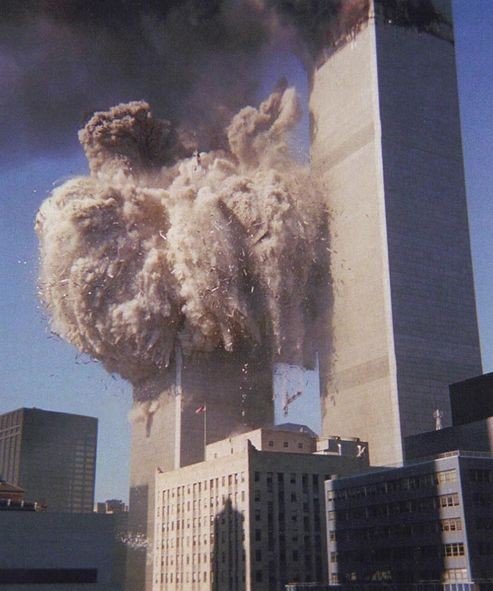
So it’s beautiful like the Roman Aqueducts, floating wind turbines, or cloud computing, and it’s horrible like the 9-11 mastermind, the medieval rack or the atomic bomb. Through creativity we access the realm of infinite possibility, and it’s literally the whole range.

Which is why creativity, unto itself, is not enough.  In fact, looking out at the world, I would say we are already being incredibly creative.  The range of experiences we can have right now through technology alone is mind-boggling.  And the ways in which we are exploiting human and natural resources for financial gain is startlingly creative.  So it is not that we live in a world lacking creativity.

It is that we live in a world lacking creativity with a moral anchor, or better said, a collective consciousness. A consciousness that considers the implications of our creations, all of them, before bringing them into being.

This is why the creativity we teach through Creative Ground is as much about accessing the extraordinary creative power we all innately have as it is about developing our collective consciousness.  This is why all of the experiences, retreats, and workshops we design to build fluency in creativity focus first on ourselves, since expanded self consciousness is the first gateway to a collective one.

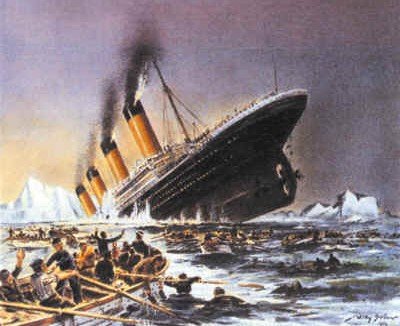
What does a collective consciousness look like? I offer a fable that has deep relevance for our lives and choices today.  It’s the story of the Titanic, which was officially launched 100 years ago last month.  The staff and crew of the Titanic, on its maiden voyage from England to America, were narrowly focused on meeting the needs and wants of its elite passengers.  Indeed, some first class ticket holders paid the equivalent of $100,000 in today’s dollars for the one-way passage to New York.

While the radio operators of the ship were busy forwarding messages through to its many important passengers, prioritizing their needs and wants, and while the captain was focused on getting to the destination as quickly as possible to meet passenger expectation, the messages coming in from other ships warning about the icebergs ahead never got through.  Nearly two-thirds of the Titanic’s passengers were lost that night, but those with the least resources died in greatest number.  In fact, while none of the children in 1st class died, all 52 of the children in 3rd class perished.

In the end, this fixation with the first class passengers’ needs and wants blinded the crew responsible for servicing them to the importance of the ship itself.  The fixation parallels our world today with all of the priority going to meet the needs and wants of the developed nations in massive disproportion to everyone else, all of it impacting our own planetary ship.

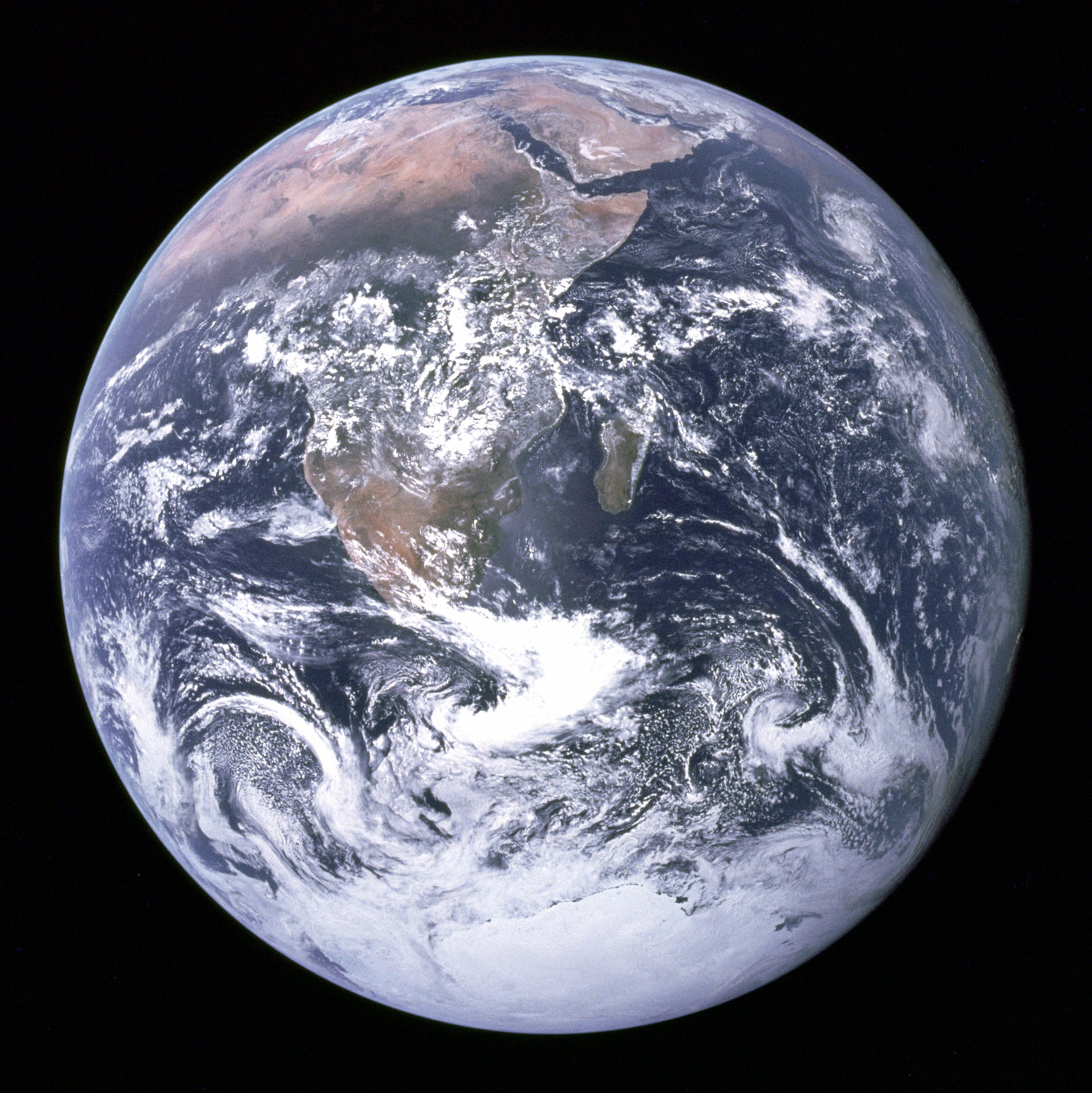
The messages we get about her are dire. The oceans are losing the bottom of their food chains, the melting of the polar ice caps are dramatically effecting ocean levels, currents and climate, and we’ve just heard that we now need 1.5 earths to sustain our resource demands on the planet into the future.

With a collective consciousness, we see that we are the passengers, we are the crew and we are even the ship. As the passengers, we must look at our needs and wants and measure them against the escalating crisis.  And as the crew, as the corporations servicing our every need and want, we must integrate a higher, more complex aspiration into our company business models that includes not just fulfilling customer demand, but also sustaining the health of the ship.  In fact, choosing a higher aspiration is what harnesses the greater creative capacities of all our employees and, at the same time, ensures the longevity of our companies, and customers, for many years to come.

And as the ship, well, we show signs of toxicity, illness and disease, both the earth itself and the humanity that feeds on her.  Without a healthy ship to carry us safely to the next shore, all of this fantastic creative potential of ours, all this seeking to create the next amazing, mind-bending thing, becomes a solidly moot point.

Freedom’s Just Another Word...

Freedom’s Just Another Word for Nothing Left to Lose

Creative Ground’s team just returned from its second creativity retreat.  Our base? The island of Moloka’i, Hawaii.  Number of guests? 6.  Scope of work? Creative practice.  Results? Unparalleled transformation…..for all of us.

Six individuals arrived carrying dark clouds of personal grief, duffel bags of dissatisfaction with work, loaded backpacks of self-doubt, and most challenging of all, clouded mirrors obscuring the truth of who they are.

Seven days later, all six individuals returned home having left the heavy weights behind and carrying instead a clear vision of themselves, their unique essence and life force, and tools for remembering.  This memory of our authentic selves, free of our own as well as others’ projections, is essential for joy, creativity and freedom.

By the end, joy, creativity and freedom reigned.

Like the first retreat held last July, I came away with profound insights about myself and the world.  Two weeks have past, and I can now more clearly see the purpose of creative practice for ourselves and the world.

And it’s all about a new way of playing together.

Because the game we’ve all been playing for millennia is so old and so broken, it’s killing us.   It’s killing us, the natural world and all the creatures who share it with us.  To work, this game has a set of built-in rules or assumptions.  These rules drive and dominate everything — our systems of education, politics, commerce, justice, and healthcare.  And the status quo depends on them.

The rules that are destroying us, ever more quickly these days, are these:

#1: Success = scale and size

Results from playing by this rule: Unsustainable exploitation of human and natural resources.  Global climate change. Planetary collapse.  War.

#2: Punishment and shame stops violence

Results from playing by this rule: Exponential growth in prisons and military expenditures.  More violence.  More fear. More death.  War.

#3: Productive, creative work only happens separate from play

Results from playing by this rule: Work and schooling environments dominated by external motivation and rewards.  High rates of stress-related disease and disorders.  Emphasis on competition and winning.  War.

#4: Life is a zero-sum game

Results from playing by this rule: Massive income disparities.  Race, economic and gender oppression.  Territoriality and control.  War.

All four of these rules lead us to war, war conditioned these days a prerequisite for freedom.  And the war-making machine of our geo-political powers is certifiably out-of-control.  Witness America’s $13 trillion in national debt.  As we continue to play by these rules, war defines our state of existence and shortly thereafter, our non-existence.

So what’s a way forward?

What’s needed right now is for more of us to stop playing by these rules.  Fold up the cards, put away the pool cue, drop the kneepads, throw away the playbook.  It’s time to find a way to play together, to work together, to practice creativity, to collaborate together based on a whole new set of ground rules — ones that honor our humanity, our life, our love, and that operate from brand new paradigms.

New paradigms.  Like success = depth.  Or nurturing, love and learning stops violence.  Or productive, creative work only happens when infused with play.  Or someone else’s gain is also our gain, and someone else’s loss is also our loss.

How about exploring these as possible paradigms that just may lead to radically different outcomes for ourselves and our planet?  In fact, everyone innately knows they will lead to radically different outcomes.  They’re already built into our spiritual consciousness, no matter what religion we do or do not follow.

So what’s stopping us?  Perhaps it’s the belief that “the game” is all there is.  Or that if we stopped playing the game, those with more power and resources might have to share some.  Or that chaos would ensue.  Whatever the fear, it’s time to face it.  And anyone of us can call it.  Call the game and put down the ball.

I call on everyone out there working in government, non-profits, corporations, farms, local communities, homes, wherever you are — those cards you’ve been holding…fold ‘em.  The game can’t continue if only a few are left playing.  If enough of us stop playing, the rules are no longer unchallenged assumptions, but become trade-able ideas.

It’s true that when the game is this old, it’s scary and alienating to stop playing.   But if more of us have the courage to fold those damn cards once and for all, we just might make it, and also discover the truth about freedom.  That is, that freedom comes not from having so much, but instead from the realization we have nothing left to lose.
A consensus...

Last spring IBM released a study conducted with over 1,500 CEOs representing over 60 countries and 33 industries across the globe.   They cited creativity as the single most important factor for success, at every level of an organization, in the coming decades.

What we really appreciated was how the press release listed the seven habits of creative leaders – lo and behold they align almost perfectly with the 8 creative habits of mind we teach and draw from in every project we facilitate.

Significant complexity, the accelerated pace of change, and unheralded inter-connectivity define the world we now inhabit.  Our way forward is with laser focus on mastering creative practice.

  • Our team at Creative Ground has developed curriculum in creative practice for groups of 100 and teams of 10.

  • We’ve catalyzed the creative capacities of organizations before beginning planning processes, leading to more expansive vision and strategic direction.

  • And we’ve introduced creative practice as a way to revitalize staff dynamics and cohesion in just one, day-long session.

To start a dialogue about how Creative Ground can help you locate, flex and strengthen your creative muscles and support transformation in your team or organization, contact: info@creativegroundhq.com

For more information about the global CEO study, link to:
http://www-03.ibm.com/press/us/en/pressrelease/31670.wss.

Creativity Unleashed

I can only somewhat recall my life before Creative Ground’s most recent retreat held on the island of Moloka’i.  Looking back, the woman I feel myself to be right now is not the same woman I saw in the mirror the day I left for Hawaii.  That woman, the one in the mirror, still held to a decrepit and tired idea that she should not take up too much space, that she should perhaps withhold all of who she is for fear of making others uncomfortable, that she must always prove to others why she gets to be here on the planet in the first place.

The new woman, the one sitting inside me at this moment, feels all the ground under her feet, has relinquished her regrets, all of them, and is fearless about being as full, real and expansive as she feels.  This is transformation fueled by creativity, leading to an idea, just one of them, for what is “authentic feminine leadership.”

Six courageous women joined us for this week-long “creativity intensive,” Creative Ground’s first.   When you combine a group of women ready to fly, a potent curriculum, and the intense healing vibrations of Moloka’i, magical things happen.  We were witness to a startling resurgence of power and energy, a deep longing to come home to self, dynamic visions for how we blend our shadow and light to become more alive, and a growing belief that we have everything we need to dream in the new world, with all the beauty we can imagine.

A few days after our return, one of these brave warriors said she was feeling, “an unshakable seam of contentment” that she had never felt before.

Our focus was indeed “creativity,” a word much maligned and misunderstood.  Creativity is often dismissed as something only some of us should do, or that only some of us can do.  How many hundreds of times have I heard someone tell me they are not creative?  And yet, it’s who we are.  Everything about our bodies and minds are designed to create, and somewhere along the way we stopped seeing that innate power of our unique creative DNA.

Abraham Maslow wrote, “The key question is not “What fosters creativity?” It is “Why in God’s name isn’t everyone creative?” Where was the human potential lost? How was it crippled? Therefore, the real question is “why do people not create or innovate?” We have to abandon that sense of amazement in the face of creativity, as if it were a miracle if anybody created anything at all.”

The most exciting thing of all is that the rest of the world may just finally be coming back to life on the subject of creativity.  Newsweek just ran a complete edition dedicated to the subject.  One article in particular (http://www.newsweek.com/2010/07/10/the-creativity-crisis.htmlmade a decent attempt at unpacking creativity, and reviewing the compelling research about America’s creative demise, thanks to unyielding activity, excessive adult-facilitated play and a massive dose of screen time.  One of the pulls-outs read:

“The correlation to lifetime creative accomplishment was more than three times stronger for childhood creativity than childhood IQ….yet American creativity scores are falling.  It’s very clear, and the decrease is very significant.  It is the scores of younger children in America—from kindergarten through sixth grade—for whom the decline is “most serious.”….And it’s left to the luck of the draw who becomes creative: there’s no concerted effort to nurture the creativity of all children…..Some scholars go further, arguing that lack of creativity—not having loads of it—is the real risk factor.”

Indeed, without a sense of our creative capacities, we live without a sense of our greatest asset, the one that guides us to our unique calling in the world, the one that helps us navigate the world with confidence and clarity, and the one that will empower each of us to dream a new paradigm into existence, as the current one is unsustainable and on the verge of collapse.

How does Creative Ground understand creativity? Creativity is the artful expression of the dynamic tensions inside us.  It is fueled by a belief in an infinite field of possibility, and it depends on our ability to perceive the fullest range of possibilities, the courage to choose from among them, and the persistence to shape them into reality.  To become more creative simply requires a practice of intentional self-inquiry.

Creative Ground is launching a team of people into the world to facilitate creative practice, in each of us as individuals, and for groups and organizations. Our body of work includes retreats, staff renewals, strategic visioning sessions, professional development workshops, one-on-one coaching and mentoring, and leadership intensives like the one we hosted in Moloka’i.  A schedule for three-day retreats in and around Washington State is coming soon.

We believe releasing this creativity is the only way forward to support the massive transformation taking place in every sector of the economy.  Nurturing our creativity is a lifelong journey, so we design a practice that takes you only as far down the rabbit hole as you’re ready to go, always guiding you to a clear objective.  I sense for more and more of us it’s time to take the leap.